
Pay attention to dietary taboos during breastfeeding
The only three categories that really need to be clearly avoided during breastfeeding are alcohol, tobacco, and excessive caffeine. The "raw, cold, spicy, and seafood cannot be eaten" spread online are non-mandatory and individualized taboos. There is no need to wrong yourself for unwarranted requirements. In the end, it is enough to follow the principle of "you feel comfortable after eating, and the baby will not be abnormal after eating milk."
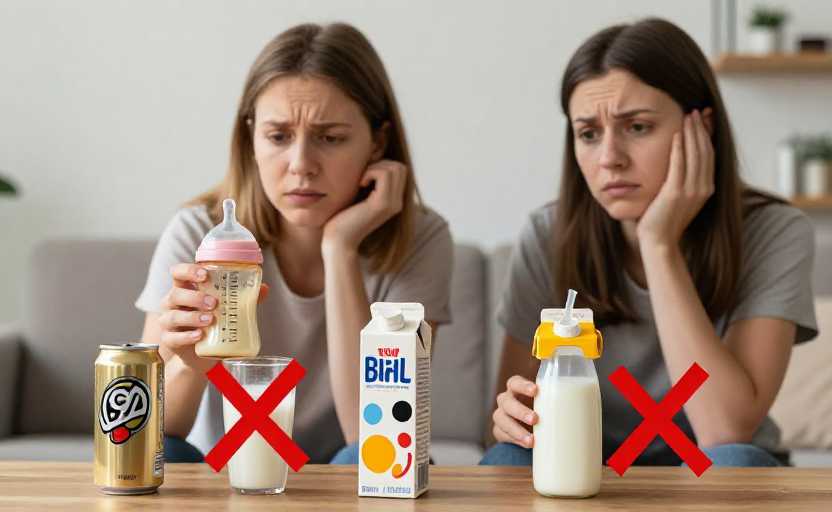
Last week, I met a mother who had just given birth 20 days ago and came to me to complain. She said that her mother-in-law would not even allow her to eat a room-temperature orange. She said, "If something cold goes into the stomach, the milk will become cold and the baby will have diarrhea." She felt aggrieved and hid in the room crying. She said that all she ate during the confinement period was bland hot soup, and she didn't even get a bite of what she wanted to eat, and the amount of milk was getting less and less. There are really too many similar misunderstandings. Let’s clarify the true taboos first, and then talk about the controversial statements.
Let’s talk about alcohol first. Don’t listen to the elders at home who say “drink rice wine or rice wine to induce lactation.” That’s all old history. The WHO has clearly concluded that there is zero safe dose of alcohol during lactation. Alcohol will directly enter the milk, affect the development of the baby’s nervous system, and may also reduce the lactation reflex. Of course, there are different voices. For example, the American Academy of Pediatrics mentioned that if you really have to take a sip of red wine at a banquet, the amount should be controlled within 1 standard cup (about 10g of alcohol, equivalent to 1 tael of low-alcohol liquor/100ml of red wine/300ml of beer). Wait 4 hours after drinking, and express and discard the milk during the period. Feeding again will not have much impact. There is no need to wean directly for several days just because of a sip of wine. But again, if you can't help it, try not to drink it. There are so many ways to induce lactation, so it's not a good idea to use alcohol-based ones.
Then there is tobacco. There is nothing to argue about. Not only is the mother not allowed to smoke, it is best for family members not to smoke indoors. Second-hand and third-hand smoke on clothes may irritate the baby's fragile respiratory tract, not to mention the impact of nicotine entering breast milk. This is a clear taboo item in industry-wide guidelines.
Next is the most frequently asked question: Can I drink coffee and milk tea? Generally speaking, it is okay to consume no more than 200mg of caffeine per day, which is about the amount of a medium cup of regular American or a cup of ordinary bubble milk tea. Just observe your baby's reaction after drinking it. If your baby doesn't cry, doesn't open his eyes and plays until early in the morning, then it's fine if you drink it every day. If after drinking it, your baby is obviously too excited to sleep, or is bloated and fussy, then you can stop for a while and try again when your baby is older. Don't dare to take a sip. When my sister was breastfeeding, she had a glass of iced Americano every afternoon, and the baby slept better than anyone else. It was really special.
The remaining "can't eat cold food, can't eat spicy food, can't eat seafood" is really the biggest misunderstanding. The human body has a constant temperature, sister. With a body temperature of 37 degrees, if you eat 0 degree ice cream and it goes into your stomach, it will already be warm. Where does the "cool milk" come from? As long as your stomach can tolerate it, if you eat it cold without diarrhea or stomachache, and if your baby drinks milk and there is no abnormality, then feel free to eat it. Spicy is also true. I have a client who is a mother in Chongqing. She never stopped eating hot pot during the entire lactation period. At most, she changed it from extra spicy to mildly spicy. The baby has no problem at all until he is 6 months old and is plump and white. Of course, there are mothers who take a bite of spicy hot pot and the baby develops a rash the next day, so you can just stop eating it for the time being. There is no need to regard this as a rule that everyone must abide by. The same goes for seafood. As long as you are not allergic to it before, most seafood is high-quality protein and is good for milk production. Unless the baby has an allergic reaction after eating it, there is no need to avoid it.
Many people say, how do I know if what I eat is acceptable to my baby? It’s very simple. Eat a small amount of whatever you want to eat, and observe the baby for 24-48 hours after eating. If there is no rash, frequent vomiting, diarrhea, or inexplicable crying, feel free to eat it. If there is a reaction, write it down, wait for about 3 months, and then try a small amount. As the baby grows up and the gastrointestinal development is complete, many things that were intolerant to the baby will gradually disappear, and there is no need to stop eating it for a lifetime. If you find it troublesome, you can keep a simple food diary. Every time you add a new food, make a note of it. If there is a problem, you will know the cause once you check it. It is much more reliable than guessing.
In fact, I have been doing parenting consultation for so long, and I really feel that many breastfeeding taboos are shackles tied to mothers. There was a mother who didn't have a bite of ice cream for a whole year because of dietary restrictions. She secretly swallowed her saliva while watching others eat in the summer. I told her to try taking a bite. If the baby is fine, wouldn't you be liberated? She half-believed it and ate half of it, but the baby was fine. She sent me a message the same day crying, saying that she finally felt like a normal person. Think about it, if a mother is not happy with her food every day and is emotionally depressed, it will affect prolactin secretion and her milk volume will decrease, which is not worth the gain.
Of course, it doesn’t mean that you should eat whatever you want. For example, if you eat too much high-fat and high-sugar food, you will easily gain weight, and you will also become thirsty if you eat too salty food. In essence, the breastfeeding diet is to make yourself happy as much as possible without harming the baby. After all, happiness is the best galactogen. If you really encounter something you are not sure about, just try a small amount and observe your child's reaction, which is more accurate than listening to the experience of any relatives or friends.
Disclaimer:
1. This article is sourced from the Internet. All content represents the author's personal views only and does not reflect the stance of this website. The author shall be solely responsible for the content.
2. Part of the content on this website is compiled from the Internet. This website shall not be liable for any civil disputes, administrative penalties, or other losses arising from improper reprinting or citation.
3. If there is any infringing content or inappropriate material, please contact us to remove it immediately. Contact us at: