
Elderly Health Services
We will give the elderly in different conditions what they want, and don’t engage in a “one size fits all” approach.
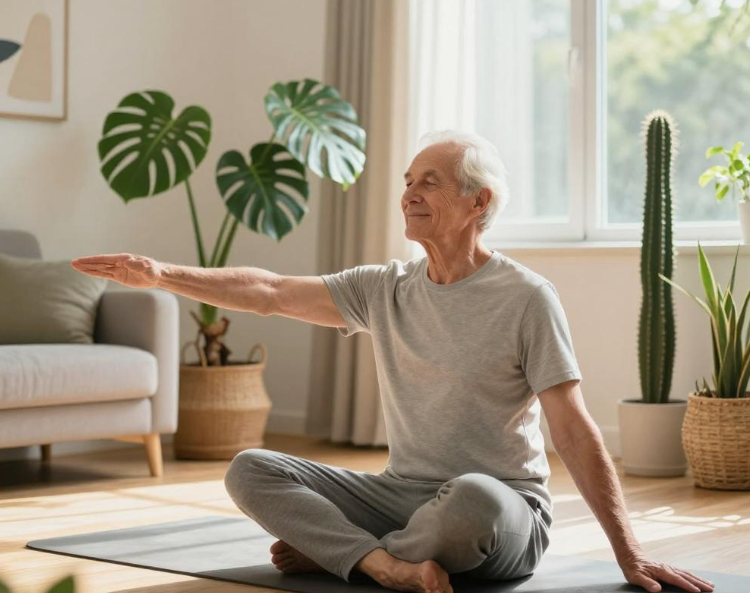
Last week I was stationed at a community health center in Xicheng District. I met 72-year-old Aunt Zhang, who chatted with her family doctor for 20 minutes. She said that she was always dizzy and had chest tightness. She just had a physical examination at a tertiary hospital last week. She had no problems except for a slight high blood pressure. She took her medicine on time, but she felt unwell all over. Later, Xiao Zhou, who was in charge of the elderly health service, did not give her a check-up, but took her to sign up for a Yue Opera interest class in the community. He also made her the logistics team leader of the interest class, responsible for the check-in and costume coordination of more than 20 old sisters. It had only been half a month, and Aunt Zhang smiled when she saw Xiao Zhou.
In fact, this matter has been quarreling in the industry for almost ten years. One group of practitioners has always insisted that the core of elderly health is "medical attributes." It is right to focus on chronic disease management, early disease screening, and door-to-door medical care. After all, the elderly are a group with a high risk of diseases, and sinking medical resources into the community and at home is the right thing to do. Don't tell me, this really makes sense. I once treated 84-year-old Grandpa Li, who was bedridden for almost 3 years due to cerebral infarction. Before, he had to change his stomach tube and urinary tube every month, which required his son, son-in-law and nurse to carry him downstairs and take a taxi to the hospital, back and forth. After struggling for a long time, the old man suffered and his family members were also tired. Later, the community launched family hospital beds, and the family doctor made home visits every week. If he needed to change the tube, he could directly make an appointment for home service. It only cost a few dozen yuan a time. The family members said that this really solved the big worry of the whole family.
The other group has a completely different view. They believe that the health pain points of about 80% of young healthy elderly people, and even some semi-disabled elderly people, are not "treatment" at all, but "no sustenance and no sense of value." If you give them ten free physical examinations, it is better to find them a small place where they can use their remaining heat. Uncle Wang downstairs in my house is a typical example. He was a middle school teacher before retiring. When he first retired, he was bored at home every day. His blood pressure fluctuated high and low. He tried several anti-hypertensive drugs but nothing worked. Later, the community recruited anti-fraud propaganda volunteers, and I took him to sign up. Now he wears a red armband every day. Walking around the community, he told old people about fraud cases and made handwritten promotional cards. It was only half a year ago. The last time he had his blood pressure measured, it was not very stable, so the doctor reduced his dosage. He said, "I am busy doing business every day. I don't have time to think about it, so my blood pressure naturally stabilized."
It is a pity to say that many places now provide health services for the elderly without understanding this logic. They always think about "standardization projects", either to build rehabilitation centers and equip them with equipment, or to set up stalls to measure blood pressure and distribute leaflets on a regular basis. The money is spent, but the effect is average. I once saw a street in a new district. It spent nearly a million to build a 200-square-meter elderly health service center. It was fully equipped with rehabilitation equipment and physical examination equipment. As a result, after it had been open for more than half a year, less than 30 people came every month. Why? The center is built in a new building of the subdistrict office. The surrounding old communities are two kilometers away. The elderly have poor legs and feet. It takes more than half an hour to walk there. Who wants to run? On the contrary, in the pavilion at the entrance of the old community, the community pooled thousands of yuan to put two shared massage chairs and set up a self-service blood pressure monitor. It was full every day. The elderly chatted while playing chess. If they wanted to measure their blood pressure, they could just raise their hands and take it. When they were tired, they could spend two yuan to press the shoulder for 15 minutes. It was much more practical than that million-level service center.
I have been doing this for almost 5 years, and my biggest feeling is that there really is no universal formula. Some elderly people cherish their lives very much. When you mention free physical examinations, they run faster than anyone else. Some elderly people are particularly taboo about going to the hospital. You call them three times and they won’t go. There are also many needs of family members that we have ignored before. We used to provide home care for disabled elderly people, always thinking that we would just take good care of the elderly. Later, we found that many family members were anxious and depressed, and often lost their temper with the elderly. Later, we added "breathing" Service" provides free 4-hour in-home care to each disabled elderly family twice a month, so that family members can go shopping, watch a movie, and take a breather. With such a small adjustment, the number of complaints about the elderly being cared for has dropped by 80%. Don't you think it's interesting?
To put it bluntly, the elderly health service is not a high-level livelihood project. It is essentially a matter of "understanding the elderly". Don't treat them as "objects" who need to be served, and don't treat them as "patients" with all kinds of diseases. Just treat them as the people who are being treated every day downstairs in your home. When greeting the aunts and uncles, ask them more about what they want and less "I think you need it" that you take for granted. Maybe the high-end service you have spent a long time providing is not as effective as the neighborhood committee aunt's casual sentence: "Sister Zhang, is the shoulder pain you mentioned last time better? I know a place where plaster is particularly effective."
Disclaimer:
1. This article is sourced from the Internet. All content represents the author's personal views only and does not reflect the stance of this website. The author shall be solely responsible for the content.
2. Part of the content on this website is compiled from the Internet. This website shall not be liable for any civil disputes, administrative penalties, or other losses arising from improper reprinting or citation.
3. If there is any infringing content or inappropriate material, please contact us to remove it immediately. Contact us at: