
Thyroid cyst dietary taboos
In fact, there are no absolute dietary taboos for thyroid cysts that are uniform across the Internet - the core principle is "dynamically adjusted according to the status of thyroid function. There are no foods that are completely off limits, only categories that need to be controlled in intake, and there is no need to blindly go to extreme taboos to eliminate cysts." This is the most practical conclusion I have drawn from having been in a thyroid clinic for 9 years and seeing thousands of patients.
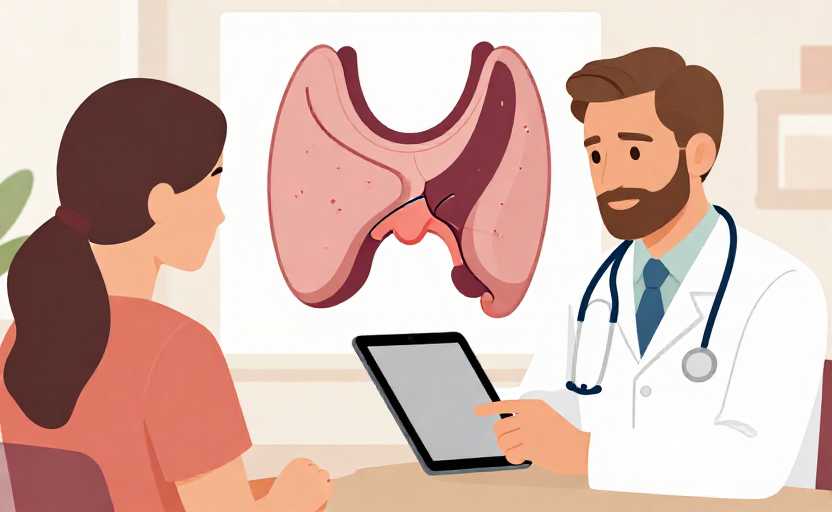
I met a 32-year-old office worker Sister Zhang a while ago. Her physical examination revealed a 1.2cm benign cyst and all her thyroid function tests were normal. As a result, I saw several health posts saying that iodine should be avoided for thyroid problems, so I immediately changed the iodized salt at home to non-iodine. I didn’t even dare to touch the seaweed and egg drop soup at the breakfast shop downstairs. When I came back for a follow-up visit half a month later, I found that my whole body was as wilted as a vegetable leaf. She said that she would lose focus after staring at the computer for half an hour at work. She was out of breath even when climbing the third floor. After checking her urine for iodine, it was almost at the critical level of iodine deficiency. I told her that she should eat iodized salt as normal and that it would be okay to eat steamed seabass and thirteen-spice crayfish on weekends. She went back and ate half-heartedly. After three months of review, the cyst had shrunk by 0.2cm, and her energy and energy had returned.
When it comes to iodine intake, there are indeed different voices in the academic community and cannot be generalized. If you live in an area with high water iodine, or if you have hyperthyroidism or Hashimoto's thyroiditis and your antibody level is several times higher than the normal value, you must control your intake of high-iodine foods. Try to avoid seafood with high iodine content such as kelp, seaweed, and wakame as much as possible. You can also consult your doctor whether to switch to non-iodized salt. ; But if you are an ordinary person in an ordinary area, and your three thyroid functions and antibodies are all within the normal range, there is really no need to struggle with iodine. It itself is an essential raw material for the thyroid to synthesize hormones. Long-term iodine deficiency will cause compensatory hyperplasia of the thyroid gland, causing problems even if there is no problem.
The second most asked question is whether all cruciferous vegetables should be avoided? What broccoli, cabbage, and Chinese cabbage can’t be touched? To be honest, this is the most outrageous rumor I have ever heard. Two years ago, a little girl even picked out the cabbage leaves in Malatang and threw them away in order to avoid cruciferous diseases. After half a year, she suffered from severe constipation, a pimple broke out on her forehead, and the cysts were not even small. You must know that cruciferous vegetables can affect the thyroid's absorption of iodine. This is based on eating two or three pounds of raw broccoli every day. In our ordinary family, a plate of fried broccoli is shared among the whole family. You can only eat less than half of the plate at most, and it is cooked. The so-called goitrogenic substances have been destroyed by high temperatures and will not have any impact at all. On the contrary, the dietary fiber and antioxidant substances in these vegetables are very good for regulating metabolism, so there is no need to avoid them.
What you really need to pay attention to and avoid are not these daily home-cooked dishes, but two types of things that are easily ignored. One type is long-term consumption of large amounts of irritating foods that disrupt metabolic rhythms, such as three or four cups of strong coffee, super strong herbal tea, or eating takeaways that are spicy and oily. In the long run, the entire endocrine rhythm is disrupted, which may stimulate the growth of cysts. ; The other type is supplements containing exogenous hormones, such as snow clams, royal jelly, and breast enhancement and anti-aging health products with unknown ingredients. Last year, a 42-year-old aunt heard from a friend that royal jelly replenishes qi and blood. She drank a spoonful every morning on an empty stomach. After drinking for half a year, the original 1cm cyst grew to 2.6cm, and she occasionally felt throat pressure. After stopping the supplement for more than half a year, it shrank to 1.1cm after reexamination. This type of thing should be avoided as much as possible.
To be honest, more than 90% of thyroid cysts are benign. After being diagnosed, many people are so frightened that they dare not eat or touch anything. They have become sallow and skinny for half a year and the cysts have not gone away at all, but have destroyed their immunity. If you are really not sure what to eat, check your thyroid function and urinary iodine during your next check-up, and ask your attending doctor. It will be more effective than reading ten health posts from unknown sources.
Disclaimer:
1. This article is sourced from the Internet. All content represents the author's personal views only and does not reflect the stance of this website. The author shall be solely responsible for the content.
2. Part of the content on this website is compiled from the Internet. This website shall not be liable for any civil disputes, administrative penalties, or other losses arising from improper reprinting or citation.
3. If there is any infringing content or inappropriate material, please contact us to remove it immediately. Contact us at: