
self healing audio
For the majority of ordinary people who suffer from mild emotional internal distress, difficulty falling asleep, and short-term distraction, choosing self-healing audio that adapts to their own state is one of the lowest-cost and lowest-operational methods of emotional regulation. There is no need to set aside time to do exercises or pay to sign up for classes. You can listen to it while commuting, fishing, and before going to bed. As long as you choose the right one, you can be pulled out of your state of distress within 10 minutes.
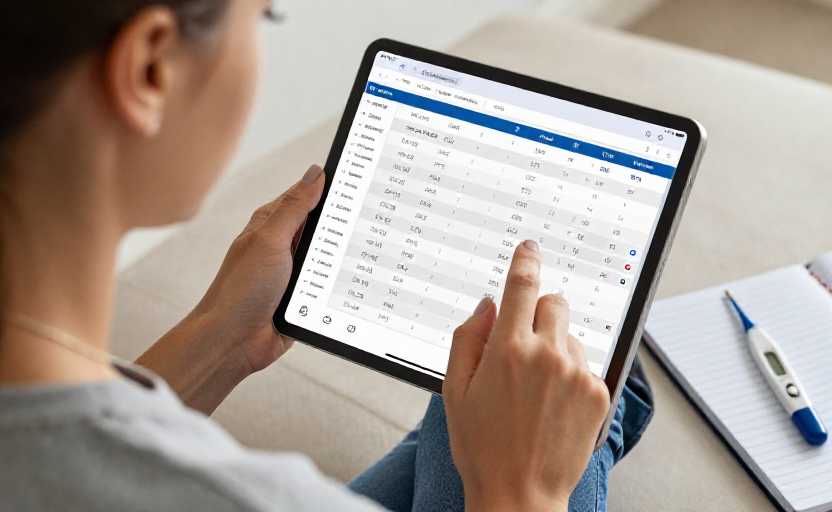
The first time I realized the usefulness of this thing was when I was working on the quarterly report three years ago. I only slept 4 hours a day for a week. I lay in bed and my mind was filled with table data. I tossed and turned until three in the morning. Then I randomly picked up an audio of forest rain with no soundtrack. I played it with the intention of giving it a try. I fell asleep in less than 10 minutes. When I woke up the next day, I thought I had reached my limit. After trying it for a week, I fell asleep on average more than 20 minutes faster than before, and I finally believed that this thing was not an IQ tax.
Of course, I have been through a lot of pitfalls, and later I came across a lot of audio that was said to be "healing". Either the background music was so loud that it drowned out the human voice, or the anchor smelled of chicken soup as soon as he opened his mouth and said, "You have to forgive everyone who hurt you." There is also the kind of "high-frequency healing audio" that is often sold for 99 yuan a set. It is said to be magical and can cure diseases and improve fortune. I bought it and listened to it twice. It is no different from the free white noise on the Internet. I just paid the IQ tax. Oh, by the way, there are still a lot of audios under the banner of metaphysics. Just dismiss them as soon as you see them. They are 100% a scam.
I later specifically checked relevant research and talked with friends who work in clinical psychology. At present, the academic community has no unified conclusion on the effect of healing audio. A team doing acoustic research will tell you that binaural beats and white noise of specific frequencies can indeed have a soothing effect by regulating brain waves. For example, alpha waves correspond to the relaxed state of the human body. Listening to audio in the same frequency band for a long time can indeed reduce anxiety levels at a statistical level. This is supported by experimental data. However, neuroscientists will also object, saying that the premise of these effects is that you have no rejection reaction to such sounds. If you have bad memories of getting sick from rain on rainy days when you were a child, you will only become more and more irritated by listening to the white noise of the rain, and it will not have any healing effect at all.
As for guided healing audio with human voice, there is even more controversy. Formal mindfulness guided audios are recommended by the psychology departments of many tertiary hospitals to patients with mild anxiety. When a friend of mine has an anxiety attack, a 15-minute body scan can indeed relieve the symptoms of hand tremors and palpitation. But there are also many people who don't follow this method at all. They say that when they hear "focus on your breathing", they feel tense and more anxious. There are also the mind-body and soul guidance audios that are very popular on the Internet. They often ask you to "connect with your higher self" and "cleanse negative energy." Many psychology practitioners think this is pseudoscience, but I have indeed seen several girls say that every time they were scolded by their leaders after listening to it for half an hour, they really felt that their chests were not congested.
Let me tell you a very interesting thing. Last year, I helped my cousin who works in preschool education choose healing audio. She takes care of more than 20 children every day. When she got off work, her ears were filled with the sounds of children crying. Others recommended her to listen to the quiet piano and the sound of running water. As a result, she After trying it out for a while, her favorite was the background sound of the old town wet market that someone else had taken: the sound of bargaining, the sound of bicycle bells, and the shouts of people selling candied haws. She said that listening to it made her feel lively and not stressful, and that it was more relaxing than any other pure music. You see, there is no unified standard for this thing at all. What others use well may be just noise to you.
I currently have more than 20 healing audios stored in my mobile phone. They are all leftover after trying dozens or hundreds of them. They are used completely differently in different scenarios. When I can’t calm down while working on a project, I listen to 40 Hz white noise without any melody. It can really improve my concentration. ; When I take the subway after get off work and I’m so crowded that I can’t breathe, I listen to the slow-talking body scan. I’m halfway through the journey in 10 minutes, and the tightness in my chest is almost gone when I get off the train. ; If I'm having an argument with a friend or getting angry at a client, I'll listen to the sound of wind blowing prayer flags that I recorded when I went to Tibet. The whirring sound of the wind mixes with the sound of the prayer flags. After listening for three to five minutes, the anger will slowly subside.
Of course, not everyone is like this. I have a friend who works in back-end development and said that no matter what healing audio he listens to, he feels noisy. For him, writing code for 10 minutes when he is emotional is more effective than any other healing method. This is so normal. There is no standard answer to self-healing. Audio is just an auxiliary tool. Use it if you feel comfortable and throw it away if you feel uncomfortable. There is no need to force yourself to follow the rhythm of others.
By the way, one last thing to mention: Healing audio is only suitable for dealing with mild, short-term emotional problems. If you have had insomnia for more than two weeks in a row, are not interested in anything, or even have thoughts of self-harm, don’t just listen to the audio and seek help from a professional psychologist. After all, audio is at best a band-aid to relieve pain. If you really have a deep wound, you still have to find a professional to deal with it, so don’t delay yourself.
Disclaimer:
1. This article is sourced from the Internet. All content represents the author's personal views only and does not reflect the stance of this website. The author shall be solely responsible for the content.
2. Part of the content on this website is compiled from the Internet. This website shall not be liable for any civil disputes, administrative penalties, or other losses arising from improper reprinting or citation.
3. If there is any infringing content or inappropriate material, please contact us to remove it immediately. Contact us at: