
European dietary taboos
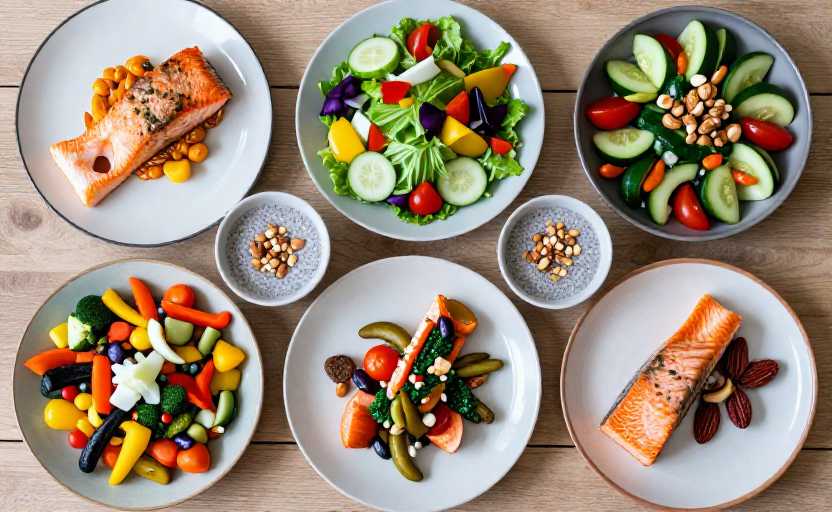
There are no uniform dietary taboos in Europe that apply to all countries and all groups of people. All widely mentioned "taboos" are essentially a collection of specific religious traditions, regional customs, and personal life choices. Rushing to apply universal rules is more likely to cause trouble.
I worked on a China-Europe food and culture exchange project a few years ago, and I went through more pitfalls in the first three months than I ate baguettes in the past ten years. When I went to Poland for the first time, I wanted to follow the Romans and brought the most famous local kielbasa sandwich as a souvenir. When I handed it to the Muslim intern of the other team, the girl’s face suddenly stiffened. I realized that she was a Muslim, and I wanted to find a crack in the ground to crawl in.
That’s not to say that religious-related rules are completely outdated. For example, the most commonly mentioned “Catholics do not eat red meat on Fridays.” This fasting tradition passed down from the Middle Ages is still strictly observed by many older generations and clergy in areas with a strong Catholic atmosphere such as those around the Vatican, southern Italy, and Ireland. I ate in a bistro in Rome on the Friday before Easter last year. The two college students sitting next to me were munching on T-bone steaks and complaining, "My grandma would kick me out of the house if she saw me like this." But then I went to the family restaurant next door to the Vatican. The menu had a whole page of vegetarian options without red meat. The boss would also remind you, "Today is Friday, red meat will be served half an hour later." It was a completely different situation.
As for the most widely circulated saying on the Internet, "Don't mention pineapple pizza in front of Italians", this is actually only half true. If you go to a mom-and-pop shop in Naples that has been open for decades, and you ask the boss for a Margherita with pineapple, the hot-tempered old man will really kick you out - after all, Neapolitan pizza is a World Intangible Cultural Heritage, and adding random toppings is considered "blasphemous food" in the eyes of the locals. I tried it last time, and the old man stared at me for three minutes, then gave me a plain pizza and said, "This is for you, try what real pizza tastes like." But if you go to chain restaurants in immigrant cities such as Amsterdam and Berlin, let alone pineapple, durian and Lao Ganma will be cooked for you. Local young people will still eat it with gusto, who cares about your traditions.
There are also some very small regional customs. For example, the older generation in Hungary don’t like to clink glasses when drinking. It is said that when the Austro-Hungarian Empire was defeated and Austrian soldiers clinked glasses to celebrate, Hungarians established a rule not to clink glasses. But now young people don’t care at all. Last time in a bar in Budapest, a group of Hungarian kids clinked glasses louder than anyone else. When I mentioned this rule, they laughed and said, “That’s all my grandparents’ business.”
To be honest, the most common pitfalls when going to Europe when eating nowadays are not old customs at all, but personal choices or health issues such as vegetarianism, veganism, gluten-free, and lactose intolerance. I once took a domestic business group to Germany. Someone ordered a bun with butter for the customer. The customer's face turned pale on the spot. Later I found out that the customer was severely lactose intolerant and had to be sent to the hospital to drink half a bottle of water. But don’t think that everyone who mentions gluten-free is really allergic. I know a French fashion blogger who makes videos every day saying that she adheres to a gluten-free diet. Then she secretly eats croissants at a roadside stall and says, “It’s okay to eat it once in a while, just to show fans.”
European locals are also quarreling over whether these "taboos" should be observed or not. Conservative gourmets believe that tradition is the bottom line. Previously, a Michelin-starred chef in Spain added Iberian sausage to the traditional Valencian paella. The local people scolded him until he closed the restaurant, saying that he had "tampered with the collective memory of Valencians."” ; But the younger generation of chefs think it doesn't matter. I had fish and chips with Sichuan peppercorns in London. The boss was a native British man and said, "There are not so many rules, as long as it tastes good."
If you really want to go to Europe to eat, don’t bother memorizing any taboo lists. The most practical way is to ask, “Do you have any dietary taboos?” ”, more useful than memorizing ten rules. After all, I once met a Swedish landlord who said that he doesn’t eat carrots because his mother forced him to eat them for three years when he was a child. You can’t find such a personal taboo no matter how much you search for guides, right?
Disclaimer:
1. This article is sourced from the Internet. All content represents the author's personal views only and does not reflect the stance of this website. The author shall be solely responsible for the content.
2. Part of the content on this website is compiled from the Internet. This website shall not be liable for any civil disputes, administrative penalties, or other losses arising from improper reprinting or citation.
3. If there is any infringing content or inappropriate material, please contact us to remove it immediately. Contact us at:
